How to Use Chopsticks: Easy Steps and Chinese Table Manners
How to use chopsticks in six easy steps, the mistakes beginners make and the Chinese table manners to know, with dim sum and noodle tips from Toki in Jeddah.
. 7 min read
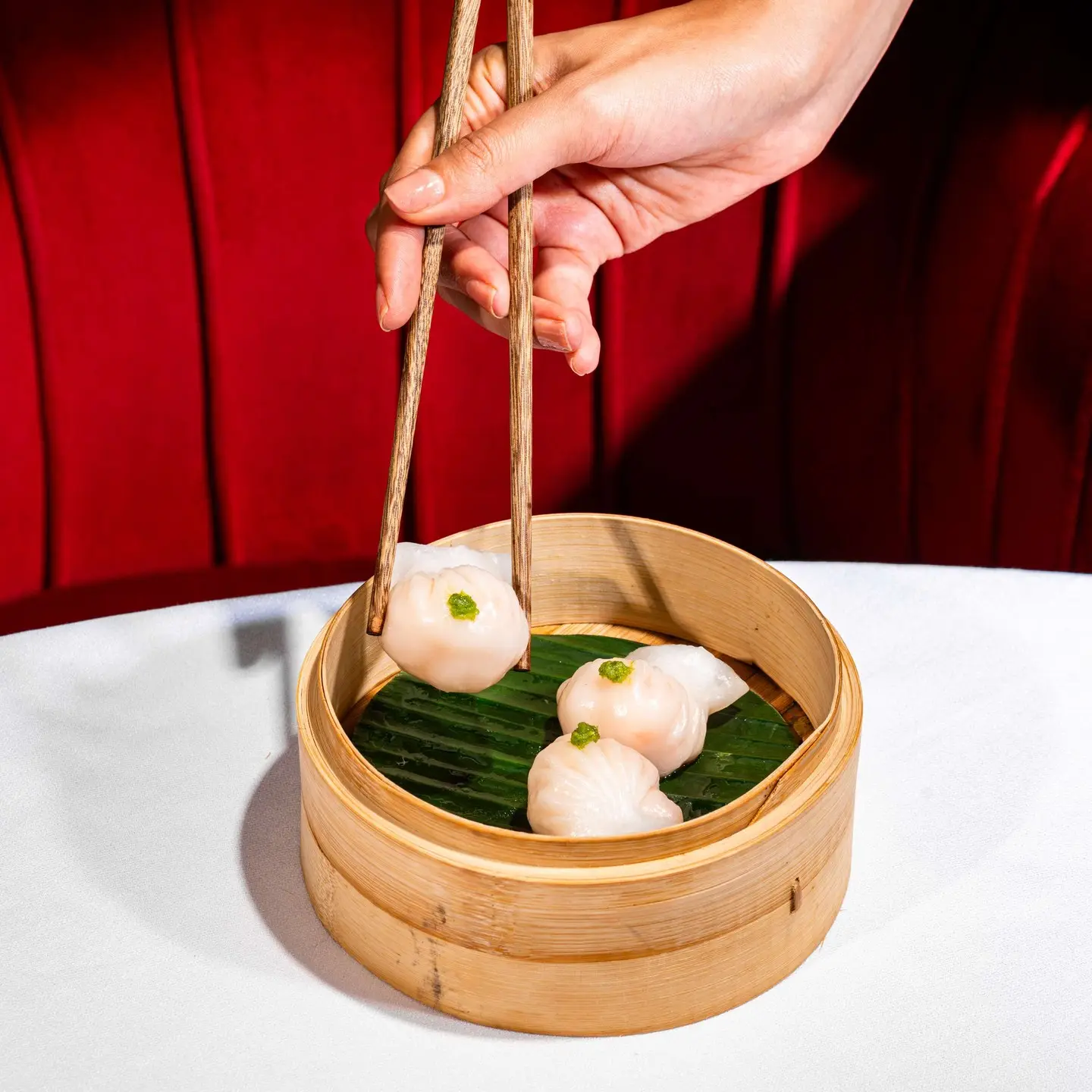
To use chopsticks, keep the bottom stick still, resting in the crook of your thumb and on your ring finger, and move only the top stick, held like a pen. The tips open and close like a beak. Most people get the hang of it within one meal.
This guide covers the grip step by step, the common mistakes, Chinese table manners, and how to eat dim sum, noodles and xiao long bao, with examples from the menu at Toki, a Chinese restaurant in Al Khalidiyah, Jeddah, selected in the MICHELIN Guide Saudi Arabia.
How do you hold chopsticks?
Rest the bottom chopstick in the crook between your thumb and index finger and against your ring finger, where it stays still. Hold the top chopstick like a pen between your thumb, index and middle fingers, and move only that one.
- Line up the tips. Hold both chopsticks together and tap the ends lightly on the table or your plate so the tips are level. Uneven tips make food slip.
- Place the bottom chopstick. Lay it in the crook between your thumb and index finger, with the lower part resting on the side of your ring finger. The base of your thumb holds it in place. This chopstick does not move.
- Hold the top chopstick like a pen. Grip it between the pad of your thumb and the tips of your index and middle fingers, as if you were about to write.
- Find the right height. Hold the pair about a third of the way down from the thick end. Lower gives more control, which helps at first. Higher gives more reach.
- Move only the top chopstick. Bend your index and middle fingers to lift it, then press it back down to meet the bottom one. Your thumb is the pivot.
- Practise on easy food. Start with something firm and dry, such as a spring roll or a piece of vegetable, then move on to dumplings, and leave loose rice until last.
What are the most common chopstick mistakes?
The most common mistake is moving both chopsticks at once, which makes the tips cross and drop the food. Gripping too hard and holding the sticks too close to the tips cause most of the rest.
- Crossed tips: if the tips form an X, the bottom stick is moving. Settle it back against your ring finger and keep it still.
- A tight grip: squeezing tires the hand and makes the sticks shake. Hold them lightly.
- Holding too low: with your fingers near the tips there is no room to open the pair. Slide your hand up.
- Spearing food: stabbing a dumpling to pick it up is bad manners, and it tears the wrapper.
- Chasing food around the plate: bring the bowl closer instead. In China it is normal to lift a rice bowl near your mouth and push the rice in with your chopsticks.
What are the basic Chinese table manners with chopsticks?
Never stand chopsticks upright in a bowl of rice, never point at anyone with them, and lay them on the chopstick rest when you stop eating. For shared dishes, use the serving spoon rather than your own chopsticks.
- Never stand them in rice: chopsticks standing upright look like the incense sticks offered to the dead, so the gesture is linked with funerals.
- Do not point or wave: pointing at people with chopsticks, or waving them while you talk, is rude. Put them down first.
- Use the rest: lay your chopsticks side by side on the rest between bites and when you finish, not crossed and not across a shared plate.
- Do not tap your bowl: drumming chopsticks on a bowl is linked with begging for food.
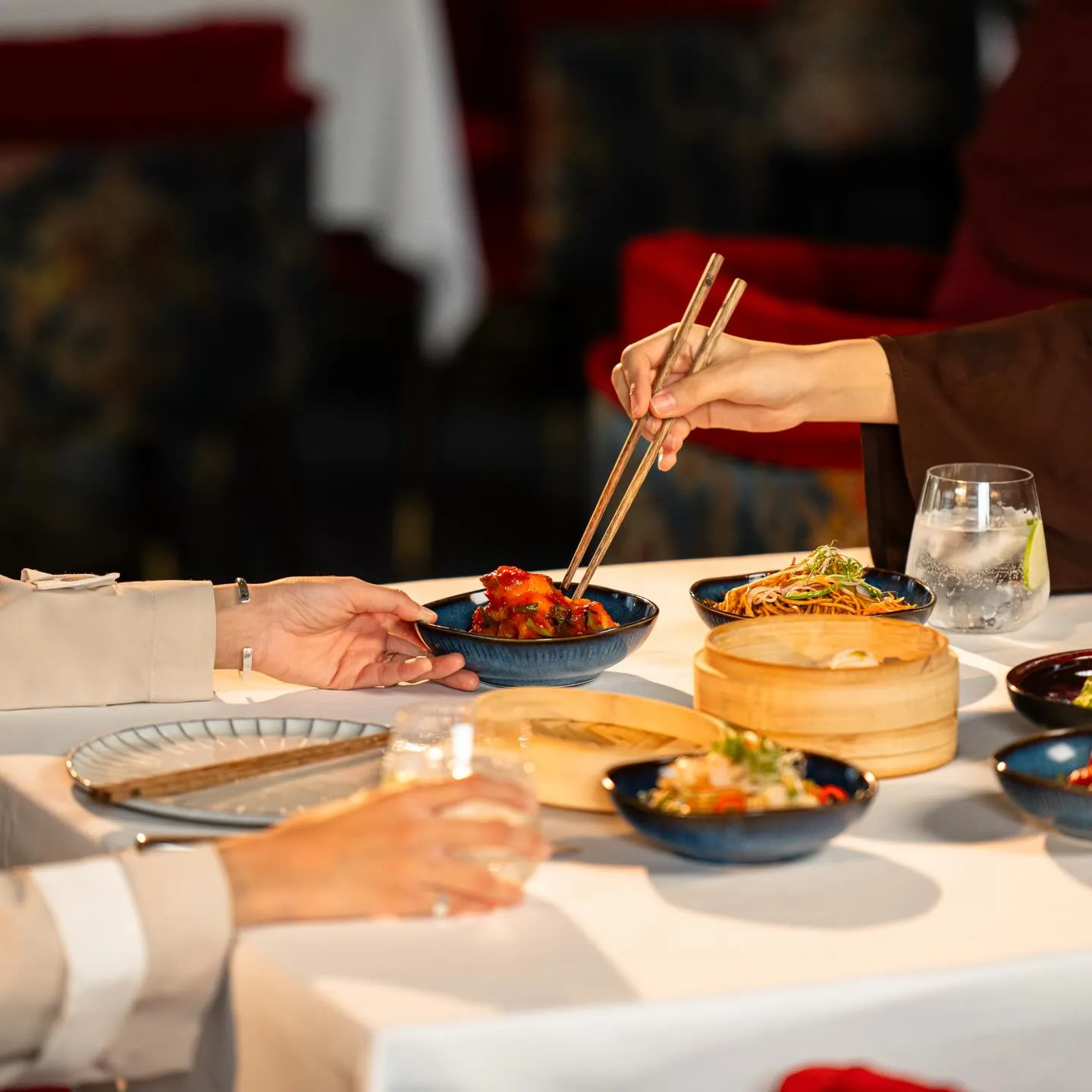
- Serving spoons for shared plates: Chinese meals are shared, so use the serving spoon or serving chopsticks to move food to your own plate, then eat with your own pair. Take the piece nearest you rather than searching the plate for the best one.
- The turntable: at a round table with a turntable, turn it slowly, usually clockwise, and check that no one is halfway through serving. Let the guest of honour or the eldest at the table take first.
- Tea: pour for the people next to you before you fill your own cup. When someone pours for you, tap two bent fingers, the index and middle, lightly on the table to say thank you without breaking the conversation.
A host may also place food on your plate as a welcome, and it is polite to accept it. There is more on what to pour in the Chinese tea guide.
Is it rude to ask for a fork?
No. Chopsticks are a skill, not a test, and if they are slowing you down, ask your server for a fork. A Chinese soup spoon also helps with saucy dishes and rice.
How do you eat dim sum with chopsticks?
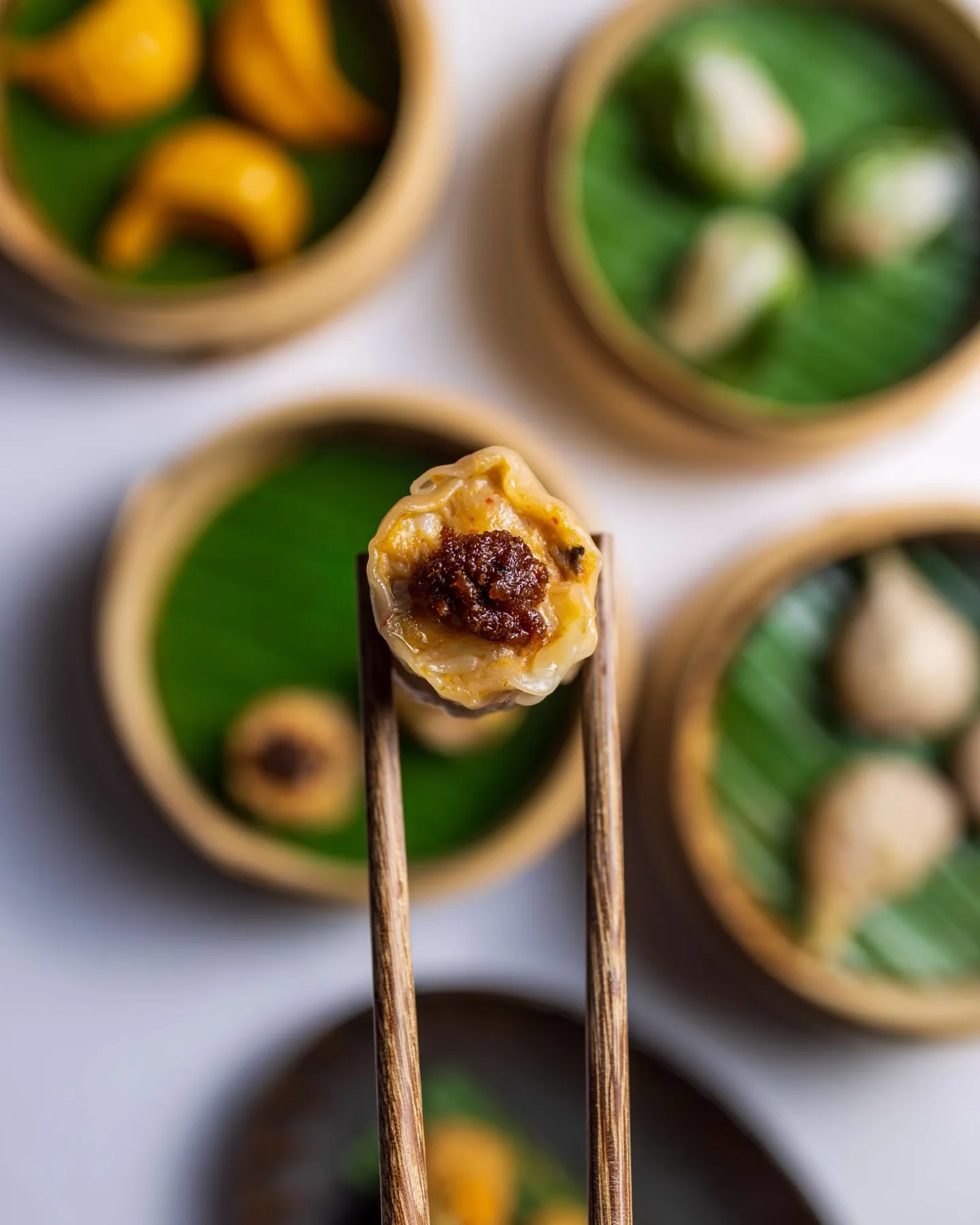
Grip dim sum gently where the dough is thickest, usually the pleated top or the base, and keep a spoon or your plate underneath on the way to your mouth. Most pieces are meant for one or two bites.
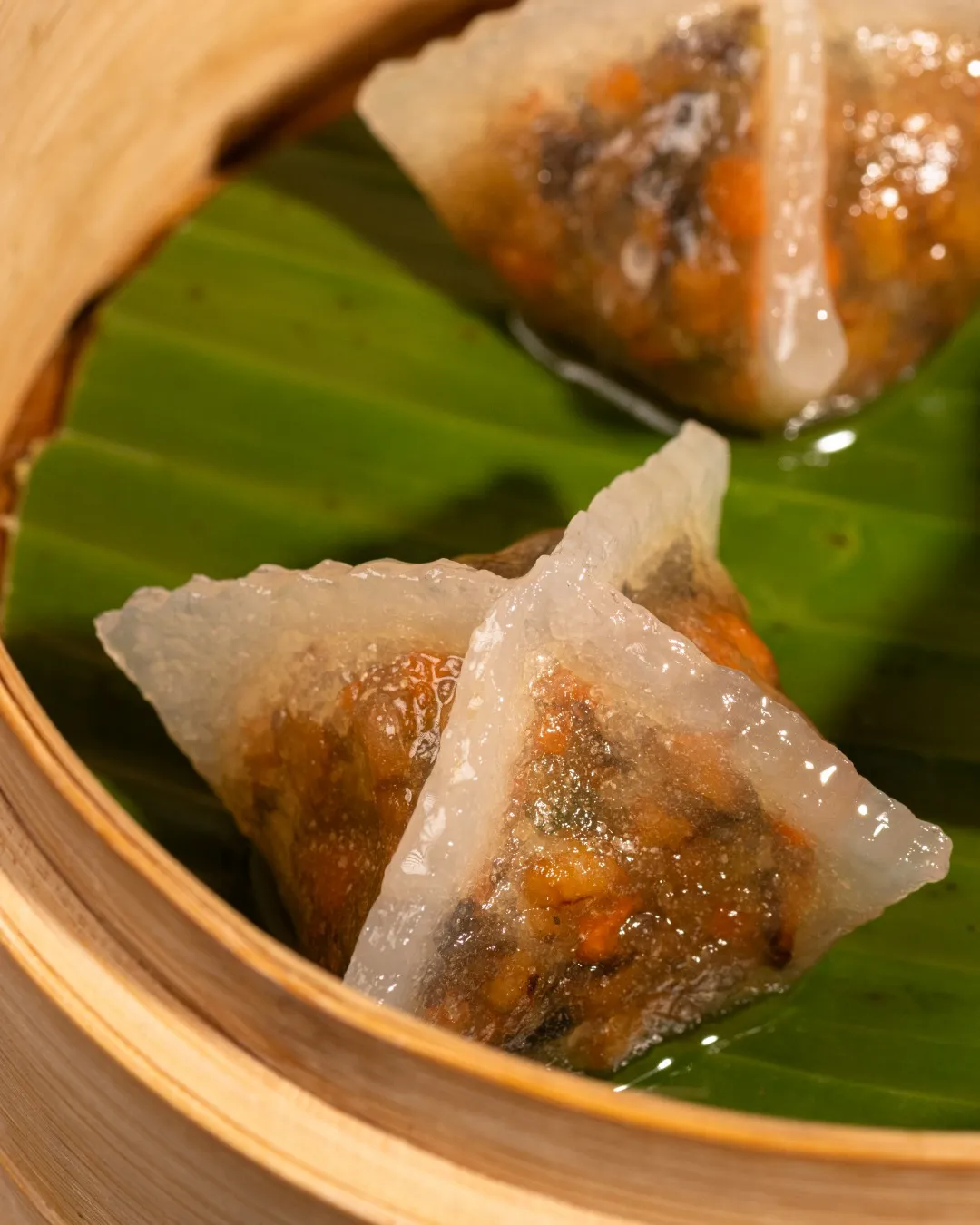
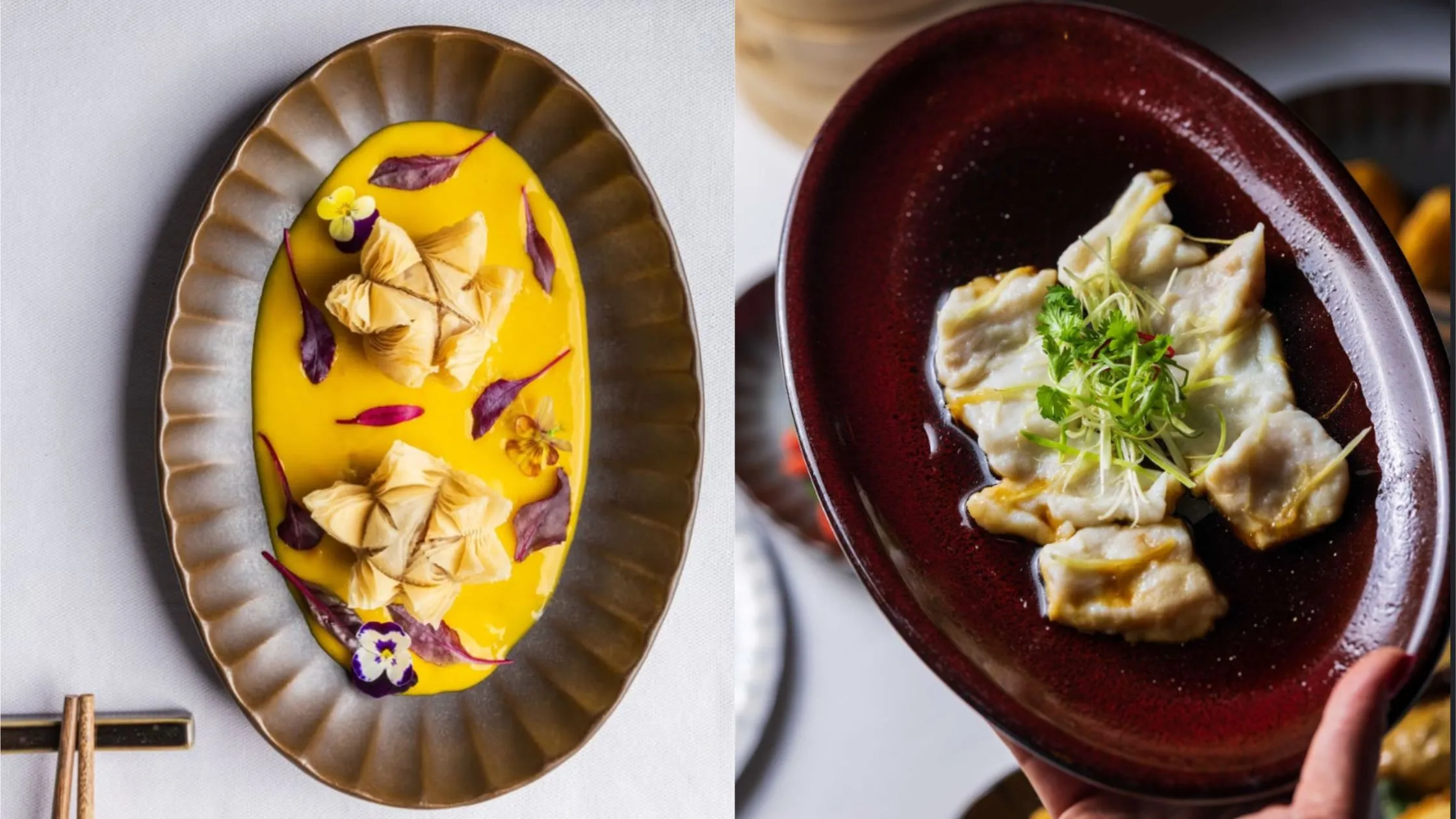
Firm, open dumplings such as the Szechuan Sui Mai, with chicken, shrimp and Chinese mushroom, are the easiest place to start. Crystal dim sum such as Crystal Shrimp and the Crystal Mushroom Dumpling have thin, translucent wrappers, so use less pressure. A quick dip in the sauce is enough. For how a dim sum meal works, read what is dim sum.
How do you eat xiao long bao with chopsticks and a spoon?
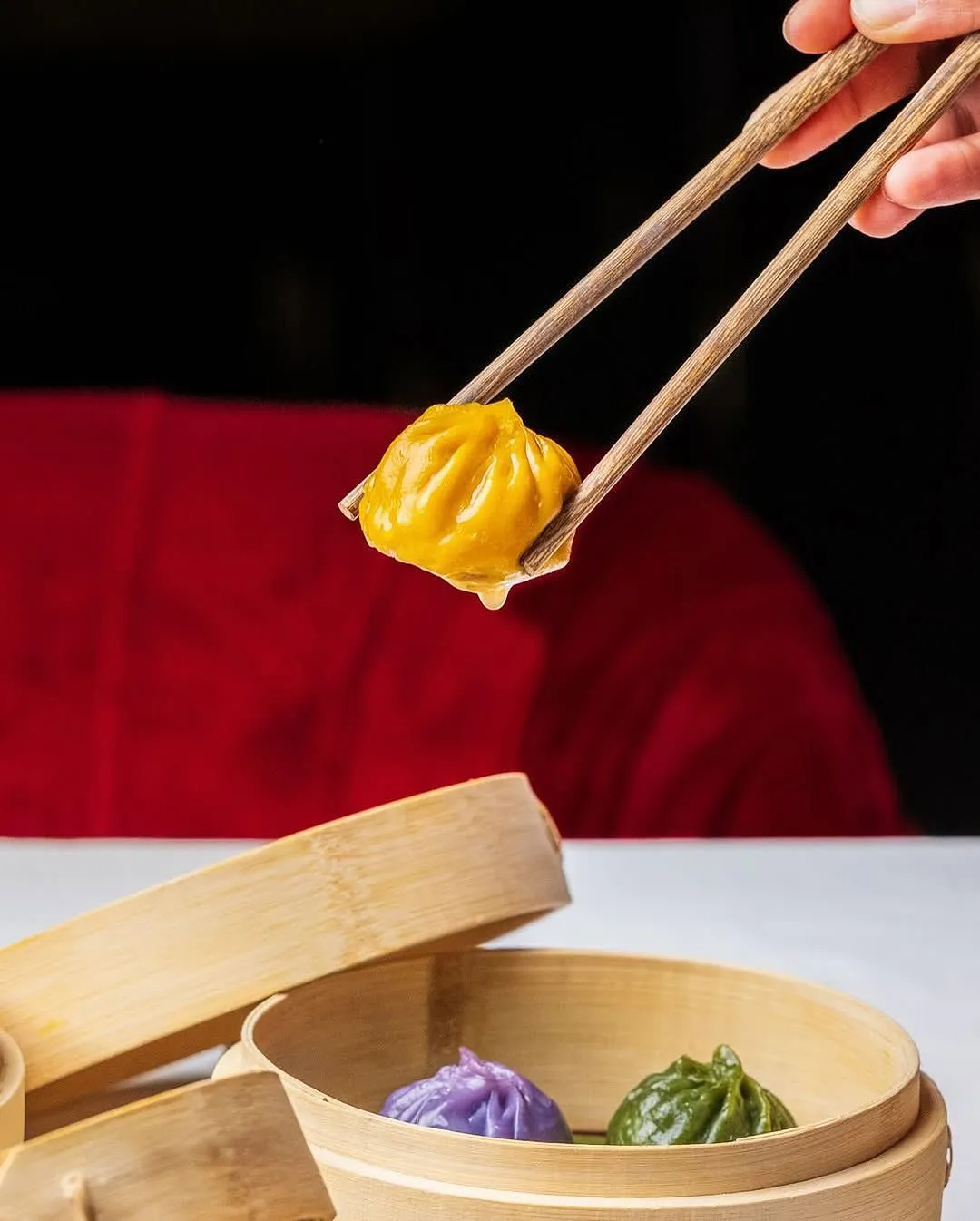
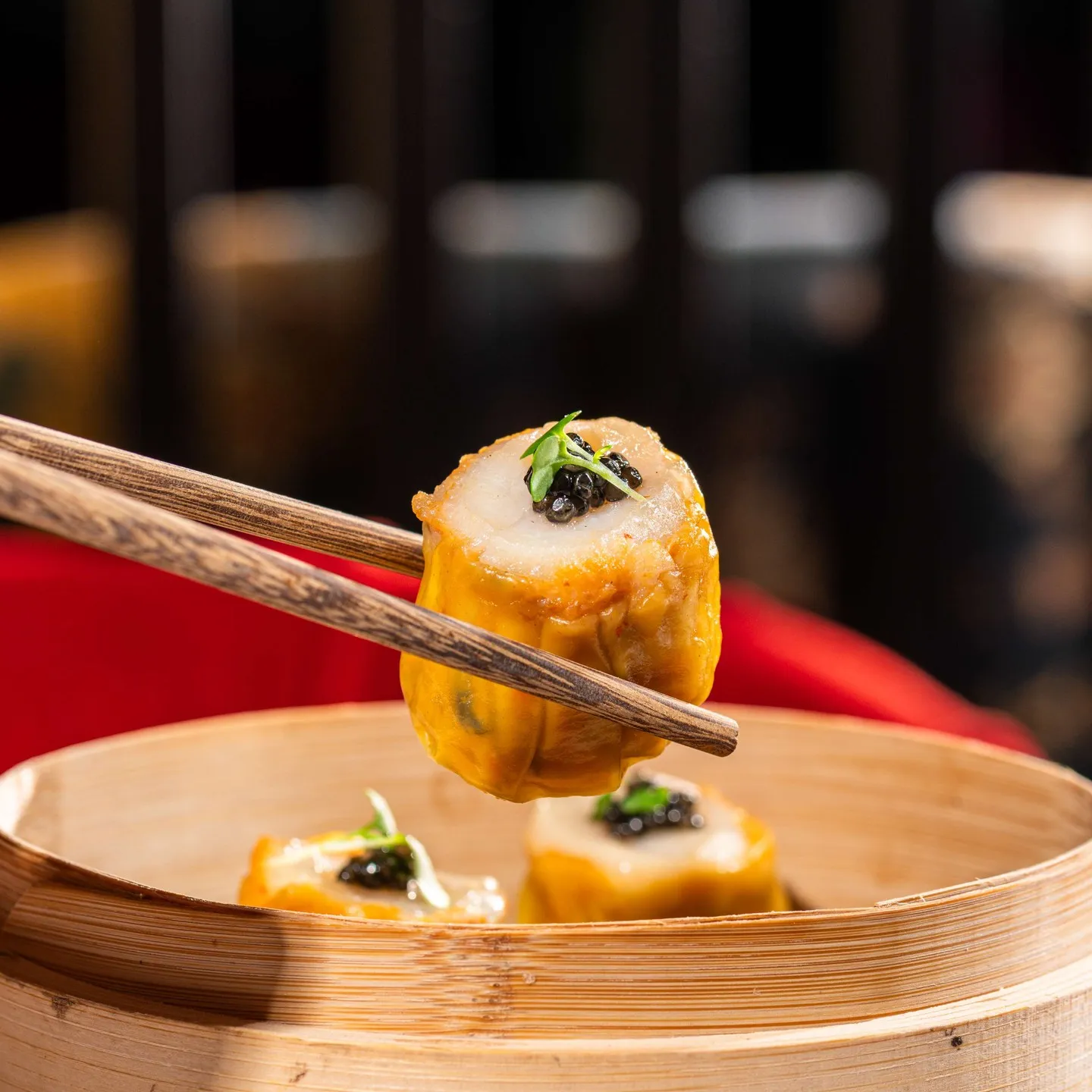
Lift the xiao long bao by its pleated top with chopsticks, set it on a soup spoon, bite a small hole in the wrapper and sip the hot broth, then eat the rest. The spoon catches the soup if the wrapper tears.
Toki’s Xiao Long Bao are Guangzhou style chicken dumplings with a light spicy sauce. Take the first one slowly, because the centre is hotter than the wrapper. The full method is in the xiao long bao guide.
How do you eat noodles with chopsticks?
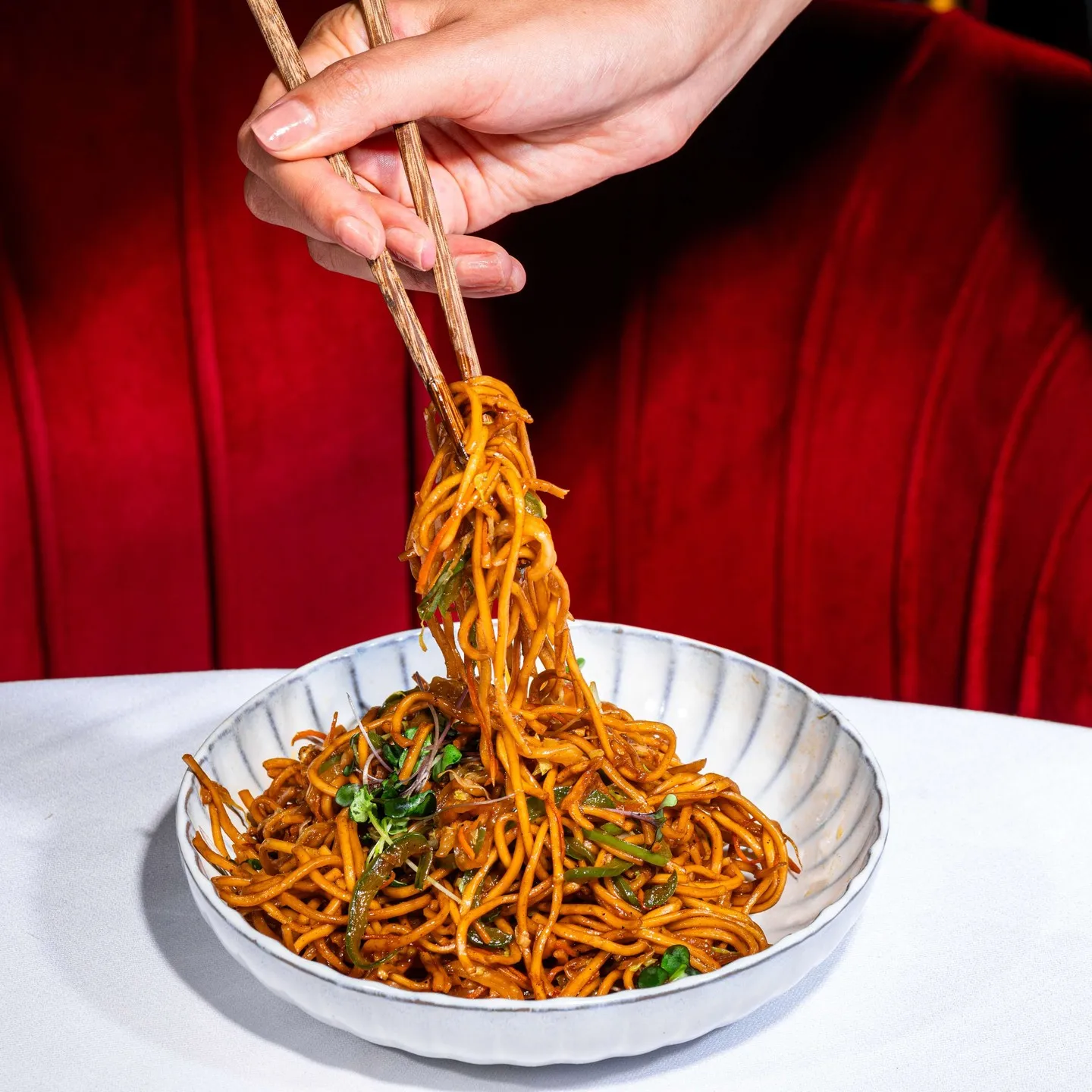
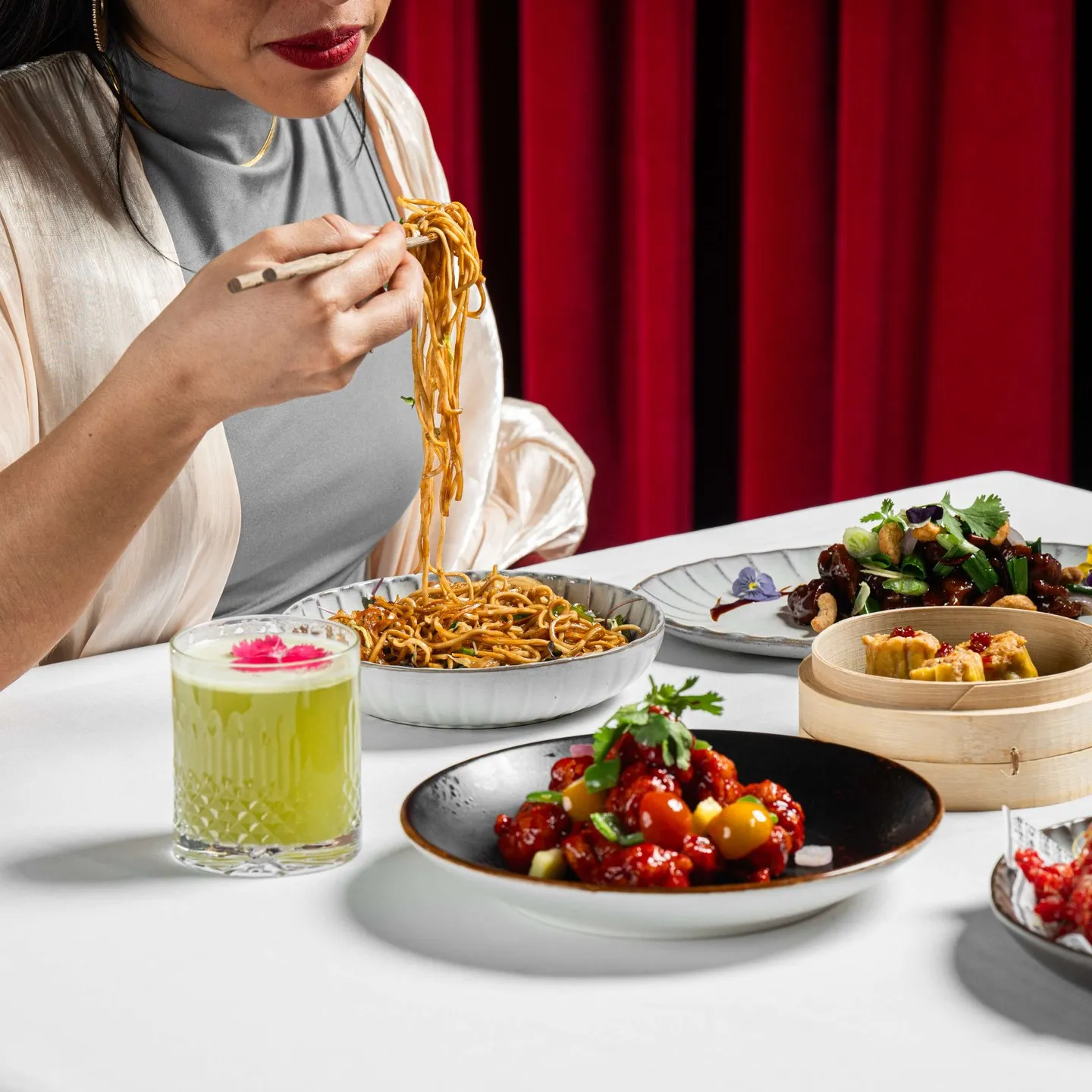
Lift a small bundle of noodles, let the loose ends fall back into the bowl, and bring the bowl a little closer so the noodles have less distance to travel. For noodles in broth, hold a spoon underneath with your other hand.
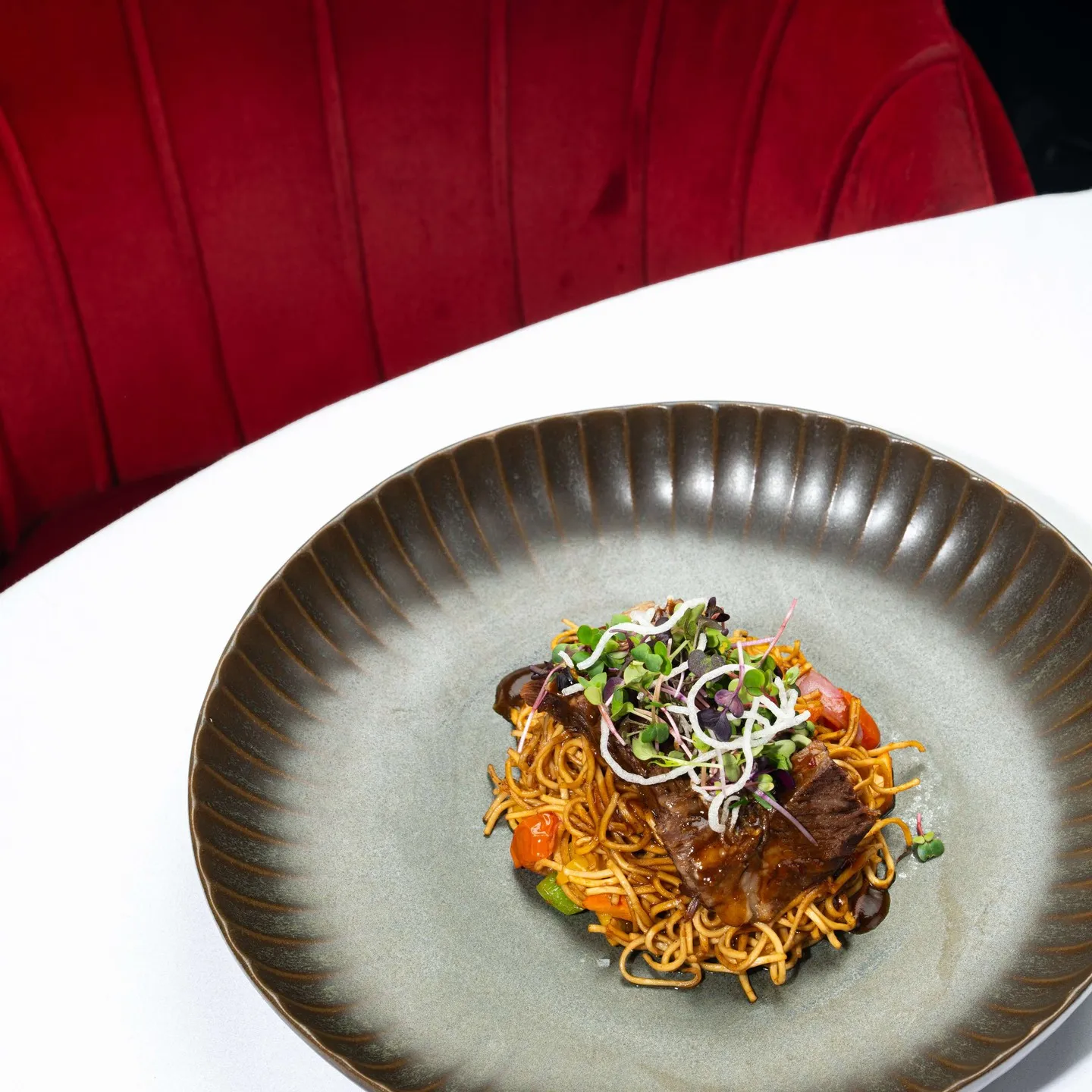
Try not to cut long noodles: in Chinese tradition a long strand stands for a long life, which is why they appear among the lucky foods of Chinese New Year. At Toki, try the Vegetable Noodles, Rice Noodles or Braised Short Rib Noodles, and see the Chinese noodles guide for the styles.
Do you need perfect chopstick skills for fine dining Chinese?
No. A relaxed grip and the manners above are enough. What matters more is ordering to share and letting the dishes arrive at their own pace. To see what sets fine dining Chinese apart, read what defines fine dining Chinese and the Toki experience.
Where can you practise using chopsticks in Jeddah?
At Toki, on King Abdulaziz Road in Al Khalidiyah, Jeddah, where dim sum, noodles and dishes for sharing make good practice. For hours and directions, see the visit page, and see current dishes and prices on the menu.
You can book your table online or call reservations on 050 466 5658.
Quick answers
Which hand should you hold chopsticks in?
Your writing hand. Left-handed diners can take a seat at the end of a row so their elbows do not bump a neighbour’s.
Why should you not stick chopsticks upright in rice?
Upright chopsticks look like the incense sticks offered to the dead, so the gesture is linked with funerals.
How do you say thank you when someone pours your tea?
Tap your bent index and middle fingers lightly on the table, a quiet thank you that does not interrupt the conversation.
What is a chopstick rest?
A small holder, often ceramic, that keeps the tips of your chopsticks off the table between bites.
Is Toki halal?
Yes. Toki runs a halal kitchen.